
Hurricane Yacht Storage: Storm Season Is Here — Are You Ready?
This morning, Tropical Storm Erin became the first significant storm of the year to raise the eyebrows of yacht owners in the Caribbean.
While it is not currently forecast to hit the BVI, it’s expected to strengthen quickly to a major hurricane, and its current forecast track bears an uncomfortable resemblance to early models for Hurricane Irma, which went on to devastate the Territory as a Category 5 in 2017 —and is therefore a reminder to us that hurricane yacht storage and preparation cannot wait until a storm is on your doorstep.
We’ve seen it before: storms change track. Early predictions can give a false sense of security. And once a storm is named, the clock starts ticking.
Storm season is officially here. The question is: Is your yacht ready where it sits right now?

The Irma Lesson: Early Forecasts Can Be Misleading
In 2017, many vessels were left exposed because owners relied on optimistic early forecasts. When Irma shifted, preparation time evaporated. Some boats weren’t stripped, others weren’t strapped down, and many sustained damage that could have been avoided with early, decisive action.

The Reality Right Now
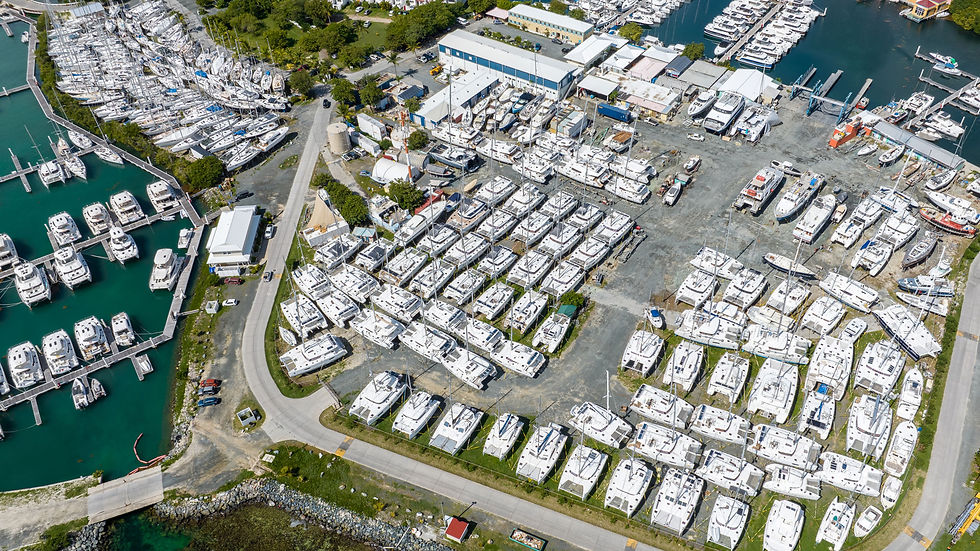
At this stage in the season, yard haul-out is no longer an option for most—all hurricane storage space ashore is gone.
That means if your boat isn’t already hauled and strapped, it will almost certainly be riding out the season in the water or in its current berth.
But storm preparation where your yacht is now is still entirely possible—and still makes a critical difference in avoiding damage and insurance disputes.
Contractors have some capacity left for targeted preparation and seasonal maintenance, but they are busy, and the closer we get to a named storm, the harder it will be to secure skilled help.
Hurricane Yacht Storage: What Most Owners Overlook
We often refer to proper storm preparation as hurricaneisation—the hardening, stripping, securing, and documentation required to prepare a vessel for a named storm.
It’s more than a checklist—it’s a mindset. And while many owners do some of the basics, here’s what we regularly see missed:
Tenders left on davits (often not covered by insurance).
Antennae and domes left exposed, risking uninsured loss.
Sails lashed but not removed—only to flog apart mid-storm.
Moisture control overlooked, leading to mould and mildew.
Strap-down points failing because the load wasn’t spread across multiple strong points.
Hazardous materials unsecured, creating environmental liability.
Assuming the marina or yard will handle everything without confirming in writing.
Even if your boat is stored in a managed facility, you remain responsible for ensuring reasonable precautions are taken.

Remove What You Can — Secure What You Can’t
The golden rule of storm prep:
Anything that can come loose will come loose.
That means removing:
Cushions and canvas.
Loose lines and fenders.
Biminis, dodgers, deck gear, BBQs.
Stackpacks and lazy jacks.
Tenders and outboards.
Tenders are often excluded from coverage if they remain mounted. The same applies to many antennae, including:
VHF whips.
Starlink terminals.
Radar scanners.
Satellite domes.
If it’s detachable, remove it. The labour to remove and reinstall is minor compared to the cost of replacement or the frustration of a denied claim.
If you’re storing high-value personal items—artwork, portable electronics, tools—consider removing them entirely. Not all policies cover non-fixed contents.
Seal the Vessel and Shut Down Power
Hatches and lockers should be:
Fully dogged and sealed.
Gaskets checked for wear.
Companionways and engine rooms locked to reduce theft risk.
Unless you have reliable yard power (rare), shut down all systems:
Disconnect electronics and turn off breakers.
Remove fuses or cut power at the source.
Leave only bilge pumps operational and monitor battery health.
Solar panels or wind generators can help maintain bilge power if unattended, but don't fare so well in a named windstorm. Remember: fire risk increases dramatically if electronics are left live and get wet.
Interior Climate Control Matters
Mould and mildew are among the most common—and often uncovered—causes of interior damage.
To reduce the risk:
Remove food and perishables.
Leave doors and lockers slightly ajar.
Place desiccant in all compartments.
Run a dehumidifier (if shore power is available), vented through a through-hull.
If you’re away for more than 2–3 weeks, appoint someone to monitor humidity levels and replace desiccants as needed.
Reduce Windage — And Trust Nothing to Hold
Sails must come down. Period.
We often see stackpacks lashed tightly to booms, only to come apart mid-storm, damaging the rig and other boats nearby.
Remove:
All sails, including furling headsails.
All canvas and shade structures.
Any deck-mounted hardware that’s removable.
Use halyards as supplemental rigging and chafe-prevention lines. Lash booms tightly and remove or reinforce anything that might vibrate or flog in high winds.
If You’re in the Water
While less ideal than storage ashore, in-water vessels can still be secured:
Remove all loose and windage items.
Use car tires as fenders (wrapped to protect topsides)—but check with your marina, as some forbid them.
Double or triple your lines, with proper chafe protection.
Secure for tidal surge, not just wind.
Disconnect shore power unless absolutely necessary.
Note: Fenders can blow out of place or burst—don’t rely on them alone.

Even Well-Prepared Yachts Can Be Damaged
You can do everything right and still suffer damage if a neighbouring boat isn’t secured. If you see an issue, never intervene without permission—it could create liability for you. Speak to the facility manager or owner first.
Hazardous Materials Can Be a Hidden Risk
Storms often turn ordinary onboard items into liabilities. If you store chemicals, fuels, or maintenance fluids aboard, make sure they’re:
Properly secured.
Clearly labelled.
In sound containers (no corrosion or leaks).
Post-storm pollution cleanup costs may be passed on to you, even if the storm caused the damage.
Document Everything
Before the storm hits:
Photograph the vessel from all angles.
Capture interior spaces and electronics.
Show evidence of rigging removal and securement.
Use timestamped photos or email them to yourself for verifiable dates.
Your Named Windstorm Plan is part of your insurance contract. Failing to follow it—or request an amendment—can jeopardise your coverage.
Understand the “Prudent Uninsured” Obligation
Most policies require you to behave as a prudent uninsured person would.
If you wouldn’t leave your sails up or your electronics live without insurance, don’t do it with insurance.
Failing to meet this standard gives insurers grounds to reduce or deny claims.
How Mainstay Can Help Now
Even with the yard full, we can prepare your yacht in place and ensure it’s as storm-ready as possible.
Our services include:
Storm readiness consultations — Identify risks and recommend fixes.
Full hurricaneisation — Removal of sails, tenders, antennae; securing; moisture control.
Guardiennage — Scheduled checks during storage, monitoring bilges, batteries, and interior conditions, plus post-storm inspections.
Seasonal maintenance management — Coordinating trusted contractors for mechanical, rigging, and systems work before resources run out.
Insurance documentation — Timestamped prep photos and written confirmation.
Our staff have handled hundreds of vessels across the Caribbean and Bahamas and know exactly where preparation often fails.
Act Before Erin Becomes More Than a Warning
Preparation done early is calm and thorough. Preparation done in panic is rushed, incomplete, and often too late.
When a storm is close enough to force your hand, it’s already too late to do it properly.
Tropical Storm Erin is likely to pass us by—but if it doesn’t, will your yacht be ready? There will be other storms.

Book Your Consultation Today
We can:
Visit your vessel and assess readiness.
Recommend immediate improvements.
Carry out the full preparation process where it sits now.
Provide ongoing guardiennage services.
Manage seasonal maintenance and contractor work.
Contact Mainstay Consulting Group Ltd. today to get ahead of the season. Let’s make sure the first storm of the year isn’t the one that catches you unprepared.


Comments